WELCOME TO JAES INTERNATIONAL TRADING


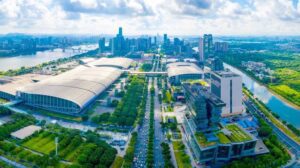
The Canton Fair Connecting Global Business to Chinese Manufacturing

The Canton Fair stands as a cornerstone of global trade, offering a direct bridge between international businesses and China’s vast manufacturing capabilities. Held biannually in Guangzhou, this event has become an essential platform for sourcing, networking, and discovering innovations. For decades, it has facilitated partnerships and driven economic growth, embodying the dynamic spirit of international commerce.
History and Evolution of the Canton Fair
The Canton Fair, officially known as the China Import and Export Fair, was established in the spring of 1957 in Guangzhou, China. It was initiated by the Chinese government as a strategic response to the international trade embargo imposed on the newly founded People’s Republic of China. The primary aim was to create a platform for showcasing Chinese products to the world and to foster economic exchange amidst a challenging geopolitical climate. The first session, held in the former Sino-Soviet Friendship Building, featured just over 1,200 exhibitors and attracted attendees from 19 countries, marking a modest but determined beginning for what would become a global trade powerhouse.
Key Sectors and Exhibits Showcased
Throughout the 1960s and 1970s, the fair grew steadily, though its progress was occasionally disrupted by domestic political movements such as the Cultural Revolution. Despite these challenges, it remained one of China’s few windows to the global market. A significant milestone came in 1978, with China’s reform and opening-up policy, which dramatically accelerated the fair’s expansion. The event began to attract a more diverse range of international buyers, and its focus broadened from primarily light industrial and agricultural products to include machinery, electronics, and later, high-tech goods. By the 1980s, the fair had outgrown its original venue and moved to the larger Liuhua Complex, accommodating thousands more exhibitors and visitors.
Benefits for International Businesses
The 1990s and early 2000s marked a period of rapid transformation. In 2002, the fair adopted its current name, the China Import and Export Fair, reflecting its dual role in promoting both exports and imports. Another pivotal development was the move to the massive Pazhou Complex in 2008, a state-of-the-art exhibition center that could host over 55,000 stands. This move symbolized the fair’s evolution into a modern, world-class event. The scale of participation exploded; from a few thousand participants in its early years, the fair now regularly attracts over 25,000 exhibitors and 200,000 buyers from more than 210 countries and regions.
Logistics and Participation Guidelines
Over the decades, the Canton Fair has not only expanded in size but also in influence and sophistication. It introduced phases focused on different product categories, enhanced its digital platforms for year-round business matching, and emphasized innovation and brand development. Today, it is widely regarded as a barometer of China’s foreign trade and a critical nexus for global commerce, facilitating billions of dollars in transactions each session and continuously adapting to trends such as e-commerce and sustainable development.
Future Trends and Global Impact
The Canton Fair, officially known as China Import and Export Fair, is a monumental showcase of Chinese manufacturing prowess, segmented into three distinct phases, each highlighting a vast array of product categories and industries. This structured approach allows global buyers to efficiently navigate the immense diversity on offer.
The Canton Fair remains an indispensable event for global trade, continuously adapting to market needs and technological advancements. It not only connects businesses but also fosters mutual growth and understanding across borders. As manufacturing and trade evolve, the fair’s role in shaping future economic landscapes is undeniable, solidifying its position as a key driver of global business connections.